
Attendance at Ruskin
The Importance of Attendance
We work extremely hard to ensure children are given the opportunity to achieve their full potential and are happy within our school. An essential part of this is every child's punctuality and attendance. By law, all children of compulsory school age must receive a suitable full-time education. Once your child is registered at school, you are legally responsible for making sure that they attend regularly and are on time.
Good attendance is a skill for life and attendance has an impact on a child's whole school experience. Missing a few days of school here and there may not seem a big deal, but research shows that it can have a significant impact on children's learning and most of the work missed is never made up, which can lead to big gaps in learning. Poor or irregular attendance can also have an impact on your child's self-esteem and confidence. Friendships can be affected by persistent absence, too: it can be hard for a child who misses lots of school to form relationships with their classmates.
Poor attendance often starts in primary school, and children who fall into this pattern are likely to underachieve at secondary school. Pupils who miss between 10 and 20% of school (or 19 to 38 days per year) perform less well in their Year 6 SATs and then stand only a 35% chance of achieving five or more good GCSE's when they move to secondary school, compared to 73% of those who miss fewer than 5% of school days.
Absence
We understand that there may be unavoidable circumstances when your child is absent from school. It is important that you report your child's absence by calling or emailing the school office (01793 332107 / admin@ruskin.bluekitetrust.org) for every day that your child is off school. We have a duty of care to each and every one of our children, including knowing why they are not in school, therefore, if we have not been notified of an absence we will text and telephone home that day.
Illness: The NHS and the Chief Medical Officer say it is usually appropriate for parents/carers to send their children to school with mild respiratory illness, including general cold symptoms like a minor cough, runny nose or sore throat. It can be difficult to decide if your child is well enough to attend school so we suggest the following:
-
- A child should not attend if he/she has a fever/temperature and is feeling unwell enough that he/she cannot perform his/her normal daily activities.
- If a child has vomited or suffered diarrhea, it is important that they do not return to school until 24 hours from the last bout of vomiting or 48 hours from the last bout of diarrhea.
To help you decide whether your child is well enough for school, please use the following link for further advice provided by the NHS:
https://www.nhs.uk/live-well/is-my-child-too-ill-for-school/
Medical Appointments: Where possible appointments should be booked outside of school hours.
-
- when a pupil has a medical/dental appointment this should be confirmed with the school office by showing an appointment letter, email or text
- pupils are expected to attend school prior to the appointment and return to school after the appointment. Any prolonged absence outside of the appointments/travel time will be unauthorised
- authorisation will not be given for pupils to attend family member's medical appointments
Unexplained Absence: As we have a safeguarding duty for our pupils, it is essential that we know where all our pupils are during the school day and unexplained absences from school give serious cause for concern. School registers are checked by 9.30am and if there any absences where no contact has been made by parents/carers, we will text parents and all emergency contacts to ascertain a reason for the child's absence from school. If we are not able to speak to any of the contacts listed for the child, the absence will be recorded as unauthorised and may be followed by a home visit by school staff or Education Welfare Officer.
Unauthorised Absence: children will not be allowed to miss school for:
-
- Family holidays
- Shopping trips
- Family birthdays
- Visits to or from relatives
- Family outings

There are 190 days in a school year, leaving 175 non-school days for family holidays and routine appointments.
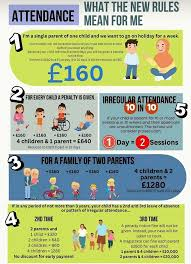
If you do not get permission and you take your child out of school, this will be recorded as an unauthorised absence and you may receive a fixed penalty fine from Swindon Borough Council. New regulations from 19th August2024 mean that a fixed penalty notice can be issued to each parent/carer deemed liable for the absence (this may include parents who do not live with the child). There is a single consistent national threshold for when a penalty notice must be considered by all schools in England of 10 sessions (usually equivalent to 5 school days) of unauthorised absence within a rolling 10 school week period. These sessions do not have to be consecutive and can be made up of a combination of any type of unauthorised absence, such as late arrivals after the register closes. The 10-school-week period can span different terms.
Punctuality
To have the best possible beginning to the school day it is very important for all children to arrive on time. When pupils arrive late, they miss out on essential instructions given at the beginning of the lesson. This can significantly reduce achievement, regardless of academic ability. Your child may also feel awkward arriving in the classroom when everyone else is settled. Furthermore, when one pupil arrives late, it disrupts the entire class and the teacher. Our school day timings are as follows:
- Breakfast club starts at 7:30am. Children are taken to or sent to their class at 8:30am
- School gates open at 8:30am and close promptly at 8:40am. All children go directly to their classroom on arrival. Any child arriving after 8:40am will need to sign in via the school office. Any children arriving after 8:45am will receive a late mark and if they arrive after 9:15am will receive an unauthorised absence an may incur a fine
- Lessons start promptly after registration
Attendance monitoring
Attendance data will be analysed termly (six times a year) to identify patterns of irregular attendance and poor punctuality. We set a target of 95% or higher attendance for every child. If attendance falls below 95%, parents will be advised and offered support to help them improve this; school will monitor attendance over the next half term. If attendance is 90% or below, this is classified as 'persistent absence'. Children class as persistent absentees will be tracked and monitored carefully through our pastoral system, and families will be required to attend a meeting with a member of the senior leadership team and Education Welfare Officer (EWO) to devise an action plan to improve the child's attendance. Throughout this process, school will look at additional support we can offer e.g. family support or school nurse and ensure parents understand the impact and possible consequences of further absence (e.g. fines).
Tips for Good Attendance and Punctuality
Bed times: tired children are hard to wake up and find it difficult to learn. Going to bed at a reasonable time makes things easier for them and you.
Be in school regularly and on time. It is settling for children and helps them get into a routine. The more regularly they are in school and on time the more they get used to it.
Get up early enough. Avoid rushing and feeling stressed. Get up early enough and give yourself enough time to get ready.
Limit TV or game time in the morning. Avoid arguments and lateness by limiting how long they are allowed to watch TV or play games in the morning. If it regularly causes problems think about banning it completely in the mornings.
Get things ready the night before. If uniforms, packed lunches etc are ready the night before it saves alot of time in the mornings.
Make time for breakfast - or come to Breakfast Club at school. Making time for breakfast can help to keep things calm in the morning and saves time rather than having to stop at the shops on the way to school